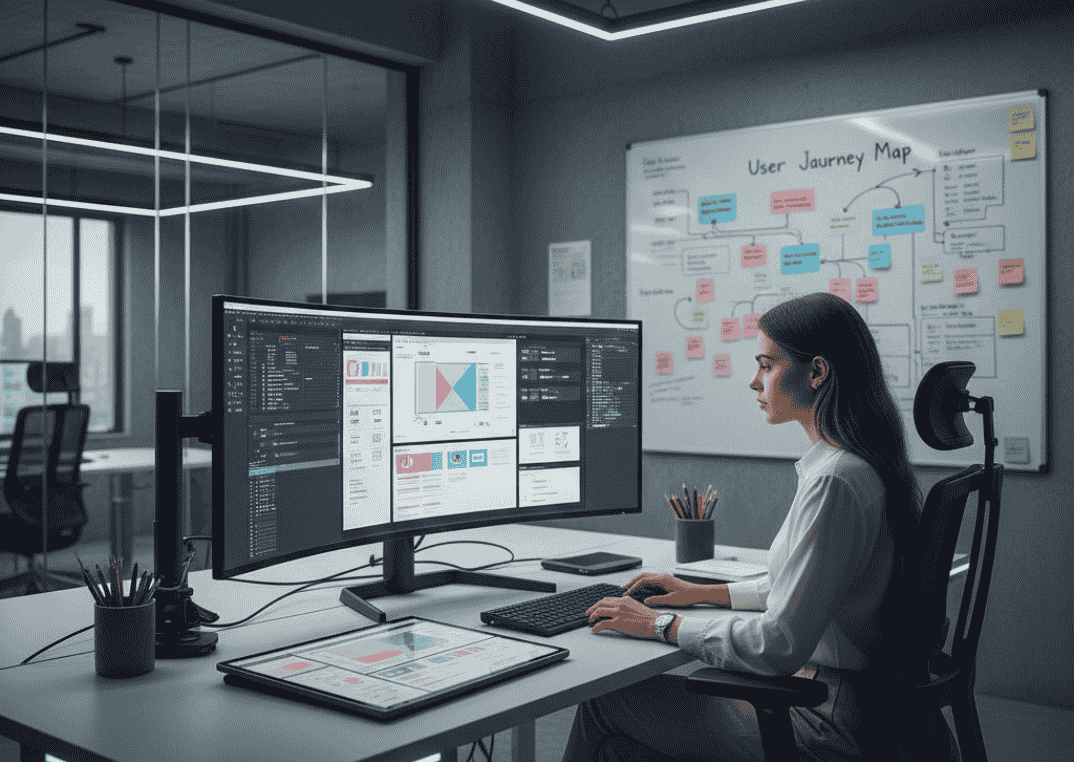



Business technology trends often arrive with significant excitement and ambitious promises. However, not all innovations translate into measurable business value. Leaders must differentiate between transformative infrastructure shifts and temporary market enthusiasm. In 2026, the focus is increasingly moving from experimental technology adoption towards structured digital maturity. Organisations are prioritising operational efficiency, system integration, and scalable infrastructure rather than isolated innovation initiatives. Technology decisions now demand alignment with measurable outcomes such as cost optimisation, performance stability, and long-term scalability.
Artificial intelligence continues to dominate discussion, yet its practical application remains uneven across industries. Businesses that approach AI strategically — integrating it into automation, analytics, and customer experience workflows — derive significant value. Conversely, organisations that adopt AI tools without operational integration frequently struggle to justify investment. The trend in 2026 is towards applied AI, where measurable efficiency improvements are prioritised over novelty features.
Cloud-native architecture remains a central pillar of business scalability. Companies across Europe are transitioning from legacy systems towards modular, API-driven environments. This shift improves deployment flexibility and reduces long-term maintenance costs. Importantly, it also enhances resilience during traffic fluctuations or operational expansion. Structured infrastructure planning now outweighs rapid tool acquisition.
Data governance and cybersecurity are receiving renewed emphasis. Regulatory frameworks across the European Union continue to evolve, placing greater responsibility on organisations to protect customer data and maintain compliance. Businesses investing in secure data management systems are not only mitigating risk but strengthening trust and credibility.
“Technology adoption must always be anchored in business fundamentals. Innovation without structure leads to fragmentation. In my experience, organisations that prioritise architectural stability and operational clarity consistently outperform those chasing short-term technological excitement.”
— Lukas Schneider
Automation is another major focus area. However, the emphasis has shifted from task automation to process optimisation. Integrating systems across departments improves transparency and reduces dependency on manual coordination. European enterprises increasingly view automation as a strategic enabler rather than a cost-cutting tool.
Sustainability considerations are also influencing technology decisions. Infrastructure efficiency, reduced server consumption, and optimised cloud resource allocation contribute to environmental responsibility. Digital transformation strategies now frequently include sustainability metrics alongside financial KPIs.
Ultimately, the most relevant technology trends in 2026 are those that reinforce stability, efficiency, and scalability. Leaders who evaluate emerging tools through a strategic lens — rather than a reactive one — position their organisations for sustainable long-term growth. Measured adoption consistently outperforms impulsive experimentation.